


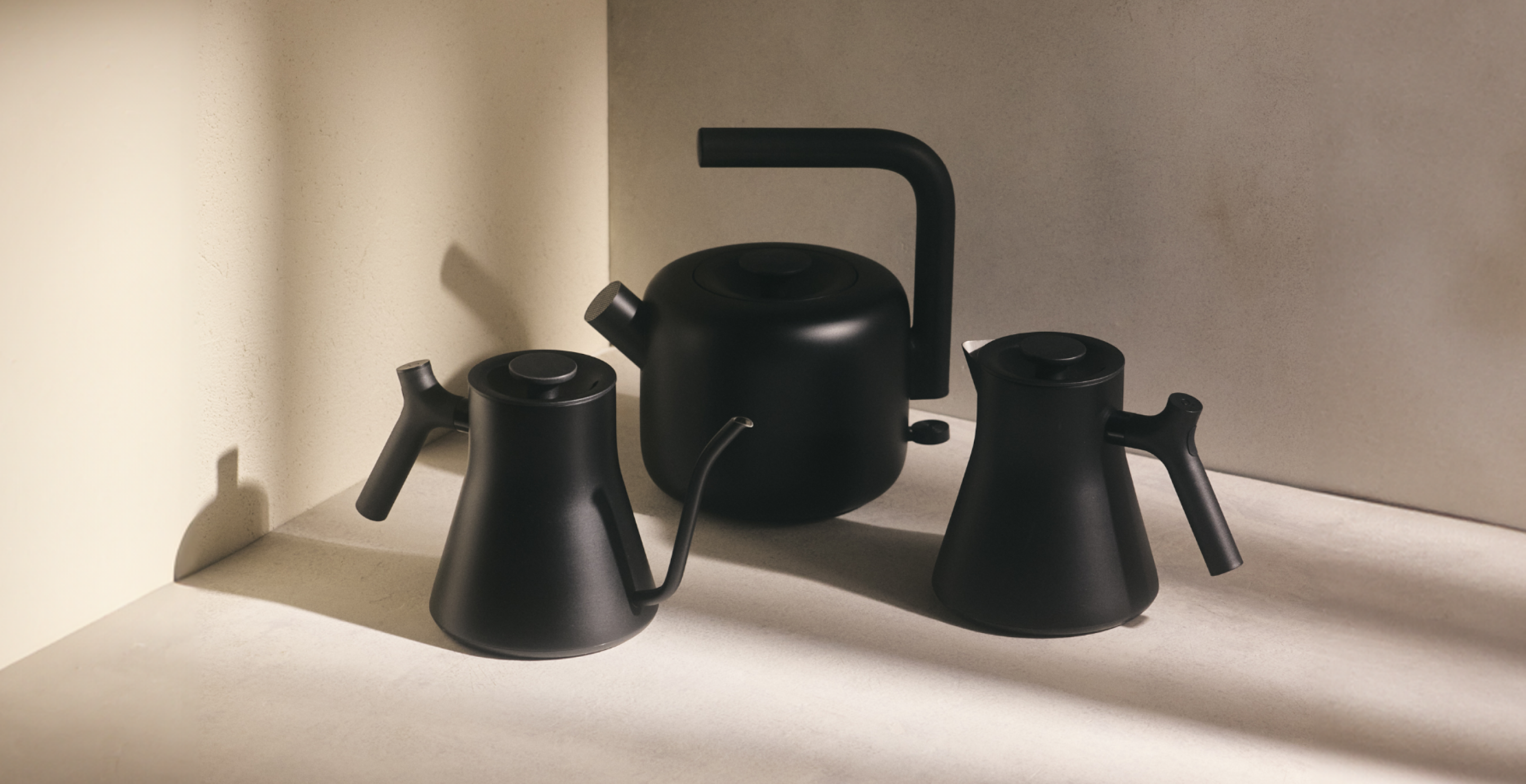
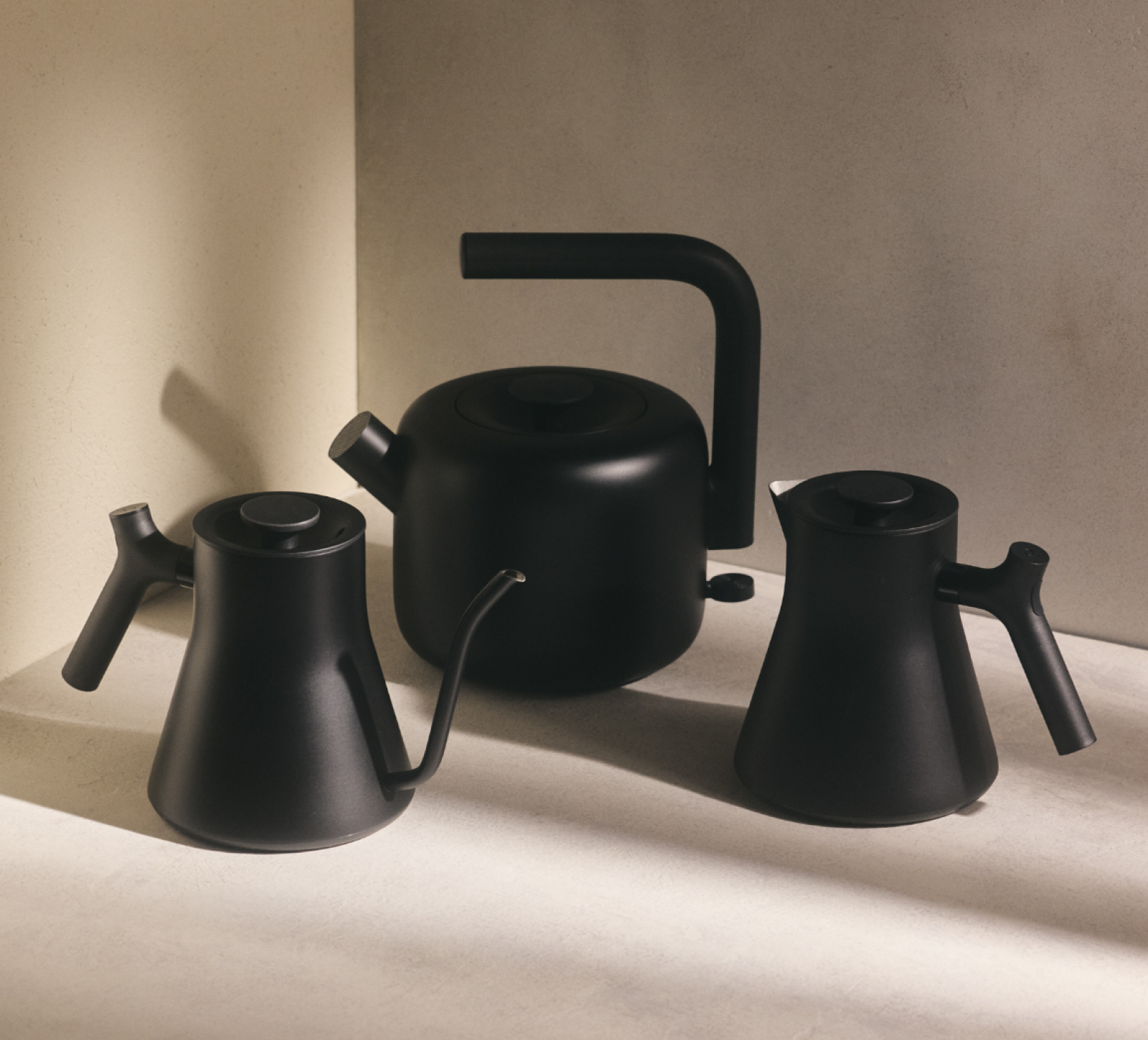
Choosing the right tea kettle seems simple until you realize just how many options exist. Whether you’re steeping delicate green tea, brewing bold black tea, or perfecting your pour-over routine, your kettle plays a key role in the final cup.
Here’s a breakdown of the main types of tea kettles and how to find the one that fits your style.
Electric vs. Stovetop Kettles

Your first decision is whether you want an electric or stovetop kettle. Electric kettles are fast, easy to use, and often include smart features. Most just need an outlet to get going and many come with helpful touches like auto shut-off and boil-dry protection.
Take Corvo EKG Pro as an example. It’s not just about boiling water—it’s about precision. Key features include:
- To-the-degree temperature control
- Customizable schedule settings
- Presets for different types of tea and coffee
- Altitude setting for your location
- Adjustable hold mode to keep water hot for 15, 30, 45, or 60 minutes
- High-resolution, full-color screen
Stovetop kettles offer a traditional approach to heating water for beverages. The simple design makes them easy to use without using technology, but they lack some of the bells and whistles that are precise enough to improve the quality of your brewed tea.
Gooseneck vs. Regular Spout Kettles

The shape of the spout has a big impact on how water pours, which can affect both ease of use and flavor. Gooseneck kettles offer a thin, curved spout that allows you to pour slowly and steadily. This is especially helpful for pour-over coffee, but it can also enhance tea brewing by helping you saturate leaves evenly and mindfully. That control can improve extraction and create a more focused brewing ritual. Stagg EKG Pro is a popular gooseneck kettle designed for precision and performance.
Regular spout kettles have a wider opening and a faster pour. They work well for general tasks like filling a French press, making instant oatmeal, or preparing hot chocolate. You can still use them for coffee or tea, but the less controlled flow may make it harder to pour evenly.
Stainless Steel vs. Glass Kettles

The material of your kettle affects how it looks, how it performs, and how long it lasts.
Glass kettles let you watch the water as it boils. They look sleek and don’t affect the flavor of your water. However, they are more fragile and not as efficient at retaining heat, which means the water cools down faster.
Stainless steel kettles are much more durable and better at holding heat. They also resist dents and scratches, making them a good choice for daily use. Stainless steel heats water more quickly than glass and keeps it hot longer, which can make your routine more energy-efficient.
Variable vs. Non-Variable Temperature Kettles

A variable temperature kettle lets you set a specific temperature, which is important for unlocking the best flavor in both tea and coffee.
Different teas call for different temperatures. Green and white teas do best with lower heat, while black and herbal teas typically need hotter water. The same goes for coffee—too hot, and it can taste bitter. Too cool, and the flavor may not fully develop. Variable temp kettles like Stagg EKG Pro or Corvo EKG Pro help you get it just right, every time.
Non-variable temperature kettles simply boil the water. You can use a thermometer to estimate temperature, but it's harder to get precise results. These are fine for everyday use, especially if you're not too particular about exact temps.
How to Choose the Right Kettle

There’s no one-size-fits-all kettle. The right choice depends on how you brew, what features matter most to you, and how your kettle fits into your daily routine. Here are a few things to keep in mind:
Temperature control: If flavor precision is important to you, choose a kettle with variable temperature settings.
How you brew: If you mainly brew pour-over coffee or high-end teas, consider a gooseneck electric kettle with temperature presets. For more casual use, a basic stovetop kettle might be all you need.
Where you brew: Electric kettles can be used anywhere you have an outlet, like a coffee bar, office, or hotel. Stovetop kettles need a burner, so they’re best for kitchen use.
Budget: Prices vary depending on materials and features. Higher-end kettles often include extras like temperature control, scheduling, or a digital display. These features can elevate your overall brewing experience.
Design: Since kettles often live on the counter, appearance matters. Fellow’s collection includes several colorways and finish options to match your personal style.
Extra features: Some kettles offer more than the basics. Look for:
- Color display screens
- Multiple language settings
- Hold modes
- Custom chime tones
- WiFi updates for the latest firmware
Whether you’re starting your day with a slow pour-over or winding down with a cup of tea, the right kettle makes all the difference. Choose one that fits your ritual and helps you enjoy every step.