Key takeaways
- A coffee grind size chart helps you match your brewer to the right grind, allowing for balanced extraction
- Grind right before brewing to keep aroma and flavor from fading as the grounds sit
- Finer grinds extract faster because more surface area is exposed
- A burr grinder (not a blade grinder) gives the consistent particle size you need to follow a grind chart accurately.
The size of your coffee grounds has a lot to do with how your morning cup of coffee tastes. There are many more options than the medium coffee grind size you’d find in most pre-ground coffee in stores, each of which will produce a different flavor profile, and can be tailored to the type of coffee you want to make.
The 3 Main Coffee Grind Sizes
Coffee is often ground into three general sizes: coarse, medium, and fine. Different grind sizes are best suited for different coffee styles.
Before we dive deep into each grind type, here's a table that quickly breaks down coffee grind sizes and what their best use cases are:
|
Grind Type |
Appearance |
Best Coffee Use |
Distinguishing Features |
|
Extra Coarse |
Ground peppercorn |
Cold brew, Cowboy coffee, Vietnamese |
long immersion times |
|
Coarse/Medium-coarse |
Sea Salt |
French Press, percolator, Chemex drippers, siphon brewers |
great for specialty coffees |
|
Medium |
Sand |
Pour over, drip coffee |
versatile, most commonly used in coffee shops |
|
Fine |
Powdered sugar |
Espresso, Aeropress, Moka pot |
very short steep times |
|
Extra Fine |
Flour |
Turkish coffee |
usually used without a filter |
Coarse Coffee Grounds (Cold Brew / French Press)
In this grind style, the coffee beans aren't fully ground, leaving some larger chunks of beans within the finer grind. A coarse grind is often used in French press and cold water brews. The larger chunks keep smaller particles from passing through the mesh of a French press. It also makes an ideal grind for a cold brew because the larger pieces have time to brew without developing a bitter taste.
Coarse grounds can be divided into extra and medium-coarse varieties, each of which serves a particular purpose. For cold brew coffee, extra coarse grounds allow you to soak your grounds overnight without worrying that the beans will develop a bitter flavor from being soaked too long. If you're using a French press or Chemex device, a medium-coarse grind size is ideal, since the larger pieces will help to keep the smaller coarse particles from passing through the mesh and getting through to your cup.
Extra coarse grind, similar to ground peppercorns.
Use Case: Cold brew

Coarse grind, similar to sea salt.
Use case: Clara French Press, Duo Coffee Steeper, percolators

Medium Coffee Grounds (Drip / Chemex)
Drip brewers and Chemex fall more towards medium coarseness, while pour-over cones and siphons are a medium fine grind. The consistency of medium grind is similar to sand. This picture falls more within the medium fine category.
Medium-fine grounds can be used in a drip coffee maker or a siphon device, although if they are too fine, they can clog the filter and/or over extract, producing a too heavily-bodied and usually bitter or chalky cup of coffee. Medium-fine grinds are more often used for pour-over coffee, particularly if the filter is shaped like a cone. A good medium-fine grind will produce a cup of coffee that is smooth and tasty, without worry about extra grinds passing through.
Use case: Electric coffee makers, drip brewers, Chemex, pour-over cones, siphon brewers
Fine Coffee Grounds (Espresso / Turkish)
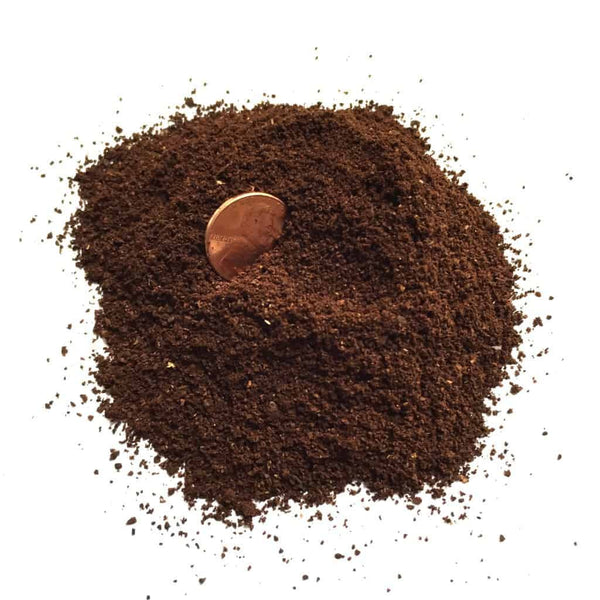
Fitting within the definition of a fine grind are fine and extra-fine grounds. With a fine grind, the texture of the coffee is similar to table salt or flour. This makes it ideal for making espresso or other quick-brewed coffee. The fine grains make it easy for water to pass through quickly while soaking up the flavor of the coffee.
Extra-fine coffee grinds are typically used only in particular styles of coffee, one of which is Turkish coffee. With a texture similar to that of powdered sugar, extra-fine coffee grinds often pass through the filter along with the water, giving Turkish coffee a more unique texture and taste than other styles.
Fine to extra fine. Think slightly finer than granulated sugar. It should be difficult to see individual grounds.
Use case: Espresso and some pour-over methods such as Hario V60
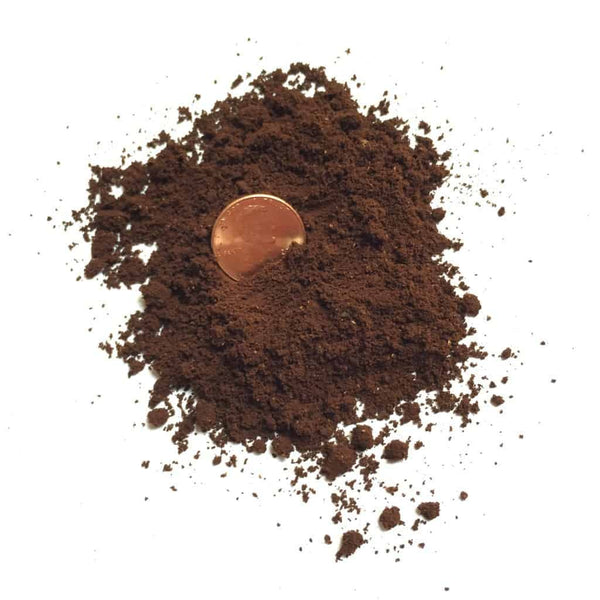
As fine of a grind as possible – it should feel and look like flour. You should barely be able to distinguish individual grounds.
Use case: Turkish (Ibrik)

Keep in mind, for the finer espresso and especially the Turkish grind, you’ll need a grinder that can handle espresso, such as our Opus Conical Burr Grinder.
The Science Behind Different Grind Sizes
Wondering why different brew methods require different grind sizes? We break down the science behind it here:
Surface Area vs. Brew Time
Think of your coffee beans like ice. A massive block of ice (coarse grind) melts slowly, while crushed ice (fine grind) disappears in seconds.
On a coffee grind size chart, a finer setting increases the total surface area, allowing water to pull out fats, acids, and sugars much faster. This is why short-duration brewing methods like espresso require a fine "powder" to get the job done in seconds, whereas a French press needs large, coarse chunks to survive a four-minute steep without turning bitter.
For example:
- Short brews: Espresso and some other drip types require the least amount of brewing time
- Long brews: Cold brew and French press coffee styles require that the coffee brew longer in order to pull as much flavor from the grinds as possible
Flow Rate & Extraction Speed
Flow rate is the measure of how much resistance your coffee provides to the water. When you use a finer setting on your coffee grind size chart, the particles sit closer together, forcing the water to work harder to pass through. This increased contact time deepens the flavor.
If your coffee tastes weak or watery, the water is likely "channelling" through too fast; by adjusting your grinder to a smaller number, you slow down the flow and allow the water to fully saturate the grounds.
- Cold brew: Requires overnight steeping to reach an ideal rate of extraction, which is why the grains need to be coarse
- Espresso/Turkish coffee: Water has little time to extract the flavor in these coffee styles, which requires a finer coffee grind
How to Dial in the Perfect Cup of Coffee
To understand just what makes a good cup of coffee, you'll need to understand the exact process of extraction.
When you're brewing a cup of coffee, the water that filters through coffee grounds extracts the fats and acids of the bean first, then the sugars and plant fibers. This means that your coffee will be infused first with acidic flavor, then sweet and bitter. It can be difficult to find the right balance among the three, and the grind size can either assist or counteract the process.
Under-extracted coffee: Because extraction follows the same progression, using grounds that are too large allows the water to pass through the filter too quickly, so only the first part of the extraction process has time to finish—only the fats and acids get through before all the water has been filtered through. This results in a cup of coffee that is sour and acidic tasting.
Over-extracted coffee: At the other end of the spectrum, an over-extracted cup of coffee happens when you use grounds that are too fine for the type of coffee you want. If it takes too long to filter through, your coffee will taste bitter and may make your mouth dry.
No matter how accurate a chart is, every coffee bean is different in terms of density and age. We recommend using our chart as your "North Star" to get close to the ideal setting. From there, use your palate to "dial in": if the cup tastes sharp or sour, move one notch finer to increase extraction. If it’s unpleasantly dry or ashy, move one notch coarser.
Choosing Between Blade and Burr Grinders
We always recommend grinding your own coffee beans for the best coffee-drinking experience, and you'll need the right kind of grinder.
Blade grinders: These are found almost everywhere, but they are not the best option if you want a consistent coffee grind. The metal blades often cut the beans unevenly, so some will be coarse while others will be finer. The friction and heat created as the blade grinder runs can also impact the coffee beans, making them taste bitter or smoky.
Burr grinders: Rather than using blades to grind coffee beans, a burr grinder uses pressure to slowly grind the beans down to the size you need. Because the pressure is applied slowly and consistently throughout, the ground coffee is also consistent, which is key to a delicious cup.
There are two types of burr grinders:
- Conical burr grinders: In a conical burr grinder, the two rings of burrs are inside one another, and gravity pushes the beans through them. These tend to be more affordable burr grinders, and if you’ve only ever used a blade grinder, they are a significant upgrade to your coffee.
Check out the Opus Conical Burr Grinder
- Flat burr grinders: In a flat burr grinder, there are two layers of burrs through which the beans are pushed. The burrs are more perfectly parallel than in a conical grinder and the beans spend more time in contact with the burrs, leading to a more consistent and uniform grind. Generally, a flat burr grinder produces the highest quality grind and more even extraction.
Check out the Ode Brew Grinder Gen 2
Why You Should Always Grind As You Go
To maximize the flavor of your coffee beans, only grind what you plan to drink each morning. It may be more convenient to pre-grind your coffee, especially during a busy work week, but once you grind the beans, you expose your grounds to the air, leading to oxidation, the deterioration of the coffee grounds and a stale flavor. This is why we designed our coffee grinders with unique single-dose loading for maximum freshness.
Mastering Your Coffee Grind Size
The key to a café-quality brew at home starts and ends with following a coffee grind size chart. By understanding how to navigate the specific numbers on your grinder, you gain total control over the extraction process—eliminating bitterness and unlocking the natural sweetness of your beans.
Whether you’re dialing in a fine espresso or a coarse cold brew, let this coffee grind size chart serve as your roadmap to the perfect cup. Start with our recommended settings, trust your palate, and don't be afraid to make small adjustments to find your unique "sweet spot."
Ready to start your grind adventure? Shop Grinders