Making your first bowl of matcha at home should feel like a quiet exhale; a relaxing and enjoyable time. Yet between the variety of vibrant green powders and tools involved, it’s easy to feel like you need a masterclass just to prepare a morning drink.
A dedicated matcha kit goes a long way toward making this process easier, transforming what might look like an intricate process into a calm routine that can be equal parts effortless and rewarding.
This guide explores every element of a traditional matcha starter kit, what each piece brings to the table, and how to find the perfect setup to elevate your countertops and daily cups.
Key Takeaways
- A standard matcha kit usually includes a bowl, a bamboo whisk, a scoop or spoon, a sifter, and a whisk stand.
- The matcha whisk and sifter perform the most critical texture-related work, preventing clumps in your drink.
- Water temperature matters immensely, as boiling water often makes the tea taste harsh or bitter.
- The best matcha-making kit feels intuitive to use, simple to store, and beautiful enough to keep on display.
What’s Included in a Matcha Starter Kit?
A well-designed matcha starter kit typically bundles the core tools you need to sift, measure, whisk, serve, and care for your tea at home. While you can purchase these items separately, a cohesive set ensures that every piece fits together gracefully, both visually and functionally.
Rather than feeling overwhelmed by unfamiliar names, think of each piece as a simple, practical tool for a delicious cup.
| Tool | What It Does | Why It Matters |
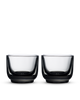
| Matcha Bowl (Chawan) | Holds the matcha and water while you whisk. | Gives the bamboo whisk enough room to move rapidly, reducing splashes and spills. |
| Bamboo Whisk (Chasen) | Blends the fine powder into the water. | Helps create a smoother texture and that signature light, aerated foam. |
| Sifter | Breaks up delicate, compacted clumps of the matcha powder. | Helps prevent a gritty or uneven consistency in your beverage. |
| Scoop or Spoon (Chashaku) | Scoops the matcha powder into the sifter. | Helps keep your preferred tea-to-water ratio perfectly consistent from cup to cup. |
| Whisk Stand | Holds the bamboo whisk as it dries. | Helps preserve the whisk’s delicate shape and extends its lifespan. |
| Tea Tray | Organizes your entire setup in one place. | Keeps the process clean, contained, and visually intentional. |
| Matcha Powder | Provides the vibrant green tea base. | Shapes the flavor, color, aroma, and overall quality of your drink. |
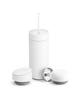
While you can try to source these pieces individually, a complete matcha setup should include everything listed, offering the added benefit of a cohesive look. Fellow’s Matcha Set is built around this idea, pairing core essentials with a single, visually pleasing footprint.
How Each Tool in a Matcha Kit Contributes to the Process

Every element in a matcha kit works together as an interconnected system. Each individual piece supports a different part of your preparation, turning what could be a messy kitchen chore into a satisfying experience.
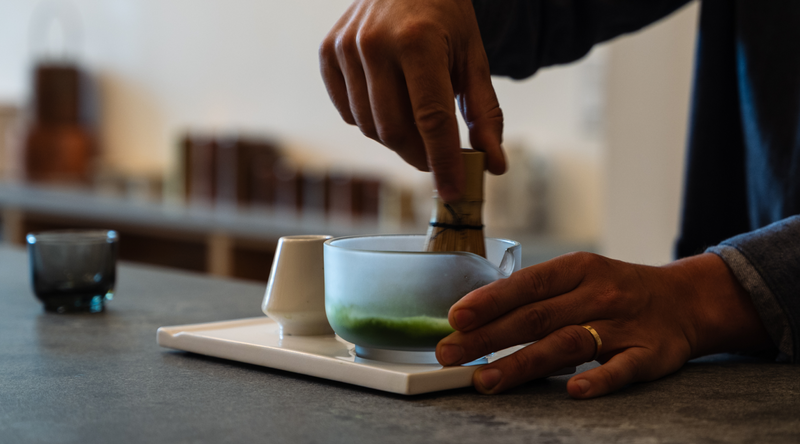
The sifter gently loosens compacted powder before the hot water ever touches it. Once sifted, the bamboo whisk evenly blends the powder, using its fine tines to create a lighter, silkier surface. The dedicated scoop helps achieve consistency by keeping your ratios predictable, and a roomy ceramic bowl gives your whisk the space it needs to move quickly without splashing over the sides.
Care and organization are equally important to the matcha-making process. The ceramic whisk stand allows the bamboo tines to dry properly and hold their elegant shape over time, while the tray keeps the entire set anchored.
Check our guide to brewing matcha at home for a more detailed breakdown of how to prepare a delicious cup.
Do You Need a Traditional Matcha Tea Set?
You do not strictly need a traditional matcha tea set to enjoy the beverage, but having one can help turn matcha preparation into a mindful ritual instead of a rushed task. That said, here are some ideas that can help you improvise with available kitchenware when you are starting out:
- A fine-mesh kitchen strainer can work well as a temporary sifter.
- A standard teaspoon can help measure your powder.
- A small, wide-bottomed bowl allows you to mix your drink.
- A handheld frother can blend the liquid quickly, though it may not offer the same delicate control or feel as a traditional bamboo whisk.
These smart substitutes can be helpful if you are trying matcha for the first time. Yet, once you decide to make this a regular habit, a dedicated kit can make your routine notably smoother, cleaner, and far more satisfying to wake up to.
Water Temperature: The Small Detail That Changes the Cup

While beautiful tools make preparation a joy, water temperature is the quiet detail that makes or breaks the flavor. Matcha is made from a delicate shade-grown leaf, and treating it with the care it deserves brings out its best characteristics.
You should always use warm, thoroughly heated water (ideally between 160°F and 175°F) rather than boiling water. Hitting fine green tea powder with aggressively hot water often scorches it, leaving your perfect cup tasting harsh, flat, or distinctly bitter.
Using a controlled pour and a gentler temperature helps the powder suspend smoothly, preserving its sweet, savory notes.
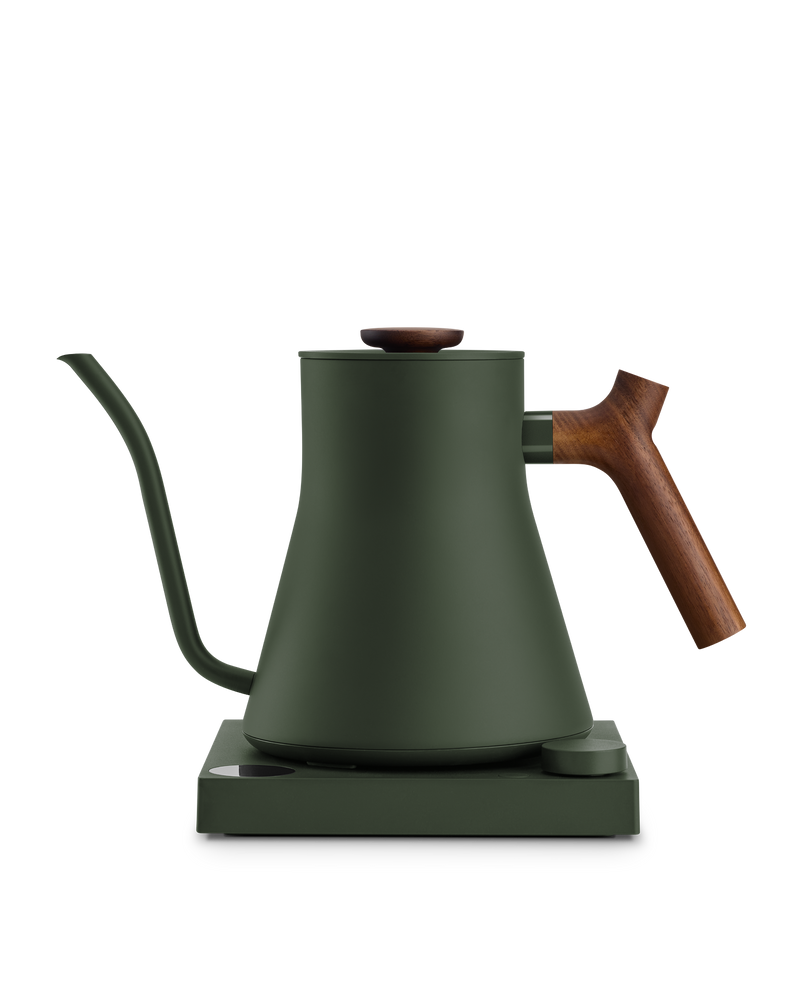
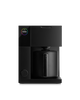
If you already value precise temperature control for your coffee or tea, integrating a variable temperature kettle makes this step effortless. Fellow’s Kettle + Matcha Kit pairs traditional whisking tools with exact thermal control, allowing you to dial in the heat with consistent precision.
How to Choose the Best Matcha Making Kit for Your Routine
Once you decide to make matcha a part of your kitchen’s portfolio, you’ll want to get a kit that fits your needs. Here are some things to consider:
- Look for complete essentials: Ensure the set includes a bowl, whisk, sifter, scoop, and stand
- Consider your drink style: If you prefer iced lattes, you might prioritize smooth mixing tools. If you prefer a traditional hot preparation, whisking control and water temperature matter most.
- Prioritize easy cleanup: A daily kit should support your routine without adding friction or clutter.
- Seek counter-worthy design: Choose a visually appealing setup that you want to keep proudly on display.
- Decide on included matcha: Kits that include matcha powder remove one more decision, making them very helpful for beginners.

How to Clean and Store Your Matcha Kit
A satisfying matcha routine does not end when you finish your drink. Simple, intentional cleanup keeps your tools pristine longer and ready for your next cup. Here are some tips to help you care for your Matcha kit:
- Rinse your ceramic bowl, measuring spoon, and sifter with warm water immediately after use so the powder does not dry into the mesh or corners.
- Run the bamboo whisk under clean water to remove any lingering green tea, then let it air-dry completely.
- Place the damp whisk firmly onto its ceramic stand to help preserve its flared shape and extend its life.
- Keep your matcha powder securely sealed and store it in a cool, dark place away from heat and light to maintain its vibrant color and fresh flavor.
Is a Matcha Kit Worth Buying?
Yes, a matcha kit is absolutely worth buying if you plan to prepare a cup regularly and want to make the process easier and more enjoyable. Using dedicated tools like a bamboo whisk and a sifter is the most effective way to achieve a smooth, clump-free texture, while the rest of the kit enhances the overall experience and adds consistency.
Ultimately, making matcha at home should be a moment of pause and reflective enjoyment rather than a complicated chore. The right tools simply help that happen more naturally.
Whether you decide to piece together your own setup over time or acquire a curated set from Fellow’s matcha essentials, the goal is simply to support an experience that makes your next cup feel intuitive and quietly satisfying.
Frequently Asked Questions About Matcha Kits
Learning to prepare matcha with traditional tools naturally brings up a few questions. Here are a few common inquiries to help you refine your technique as you start making this tea at home.
Can you make matcha without a bamboo whisk?
Yes, you can. A handheld frother, cocktail shaker, or small blender can help mix the powder into water, which works especially well for iced drinks or milk-heavy lattes. However, a traditional bamboo whisk gives you far more control over the delicate texture and helps create a beautifully aerated, traditional finish more consistently.
What is the 30/20/10 rule for matcha?
You may occasionally see the 30/20/10 rule described as a staged approach to whisking. It suggests using quicker, aggressive movements for 30 seconds to blend the powder, followed by 20 seconds of moderate mixing, and 10 seconds of lighter strokes to refine the surface foam. While it serves as a helpful framework, it is not a strict rule. Ultimately, sifting your powder, using warm water, and applying a quick zigzag motion matter much more than counting exact seconds.
What are the downsides of matcha tea?
Because you are consuming the entire leaf, matcha contains a concentrated amount of caffeine. This may not be ideal late in the day for those sensitive to jitters or disrupted sleep. Additionally, the flavor can quickly become bitter or grassy if prepared improperly, which typically happens by using water that is too hot, measuring out too much powder, or using tea that has lost its freshness.