Following recipes can be a great way to master the craft at home and discover new, delicious drinks. Yet, a single misunderstood term can completely change how your finished cocktail turns out.
Confusing a neat pour with an up drink, shaking instead of stirring, or attempting a free pour rather than using a jigger fundamentally shifts your drink’s temperature, dilution, texture, and balance, altering what ends up in your glass. In short, cocktail terminology serves as precise shorthand for the deliberate choices you make about your drink’s measurements, chilling, and presentation.
To remove the guesswork from your mixology vocabulary, this guide breaks down the 15 essential cocktail terms every home bartender should know, explaining exactly how they impact the drink in your glass to help level up your skills.
Key Takeaways
- Terms like neat, on the rocks, and up describe common ordering and serving styles, defining how a drink is presented.
- Action-oriented words like shake and muddle describe specific techniques to build texture, extract flavor, and manage dilution.
- Equipment-specific vocabulary, like jiggers and Hawthorne strainers, refers to the essential tools for cocktail preparation and pouring.
- Mastering these practical categories helps bridge the gap between trying to follow a recipe and mixing like a confident bartender at home.
15 Essential Cocktail and Mixology Terms You Should Know
Cocktail vocabulary generally falls into three neat categories: how a drink is ordered and presented, how its ingredients are physically prepared, and the specific bar tools that support the process.
Learning these terms is crucial to understanding what your guests are asking for and preparing those drinks like a pro.
Terms for Ordering and Serving Drinks
1. Neat: A neat pour refers to a single spirit served unmixed, with no ice cubes, added water, carbonated mixers, or active chilling. A neat pour requires no dilution and rests at room temperature, letting you experience distilled spirits entirely unmasked. Irish whiskey and aged rum are classic examples, typically served in a small glass or shot glass meant for sipping rather than drinking in one gulp.
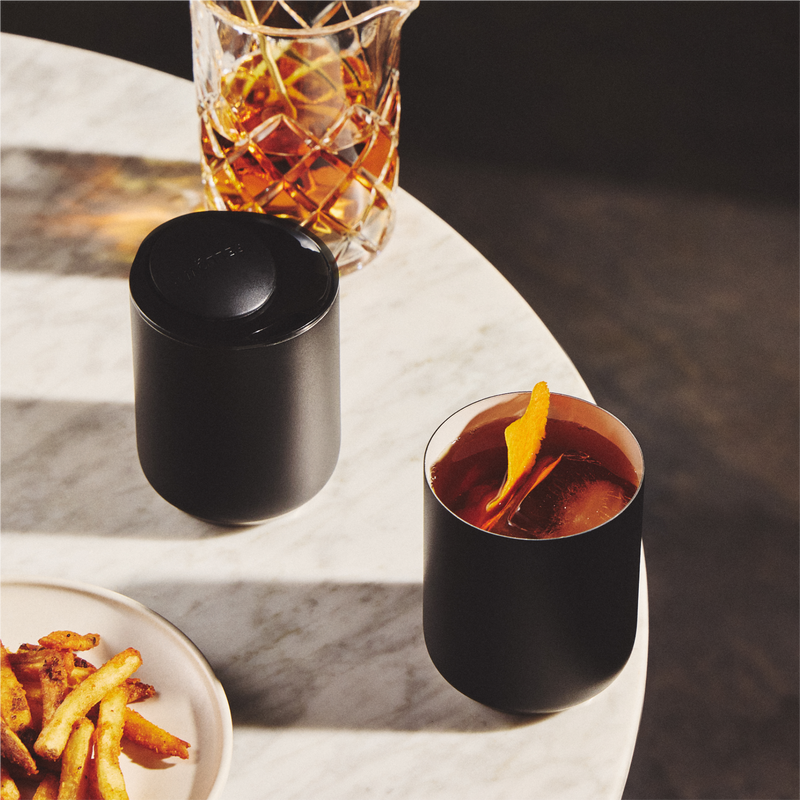
2. On the Rocks: Ordering a drink on the rocks means the spirit is poured directly over ice, which means the drink continues to chill and dilute as you drink. Serving over crushed ice creates a milder drink as the ice melts rapidly, whereas a single large cube melts slowly, offering sustained chill without compromising the spirit's integrity.
3. Up: An up drink is thoroughly chilled with ice, then strained into a stemmed glass (such as a martini glass or margarita glass). The phrase straight up is often used similarly. Unlike a neat pour, the drink is fully chilled before serving, and unlike rocks drinks, it contains no ice in the glass to dilute it further.
4. Dry: Dry describes a lower perceived sweetness, though its exact meaning depends heavily on the recipe context. In a classic martini order, ordering it "dry" specifically means using a smaller proportion of dry vermouth than standard. This simple modification tightens the balance, highlighting a bold, spirit-forward character over the softer notes of the fortified wine.
5. Dirty: A dirty cocktail incorporates olive juice or brine. This addition introduces distinct salinity, savory complexity, and a slightly cloudy appearance to the finished cocktail. The volume of olive juice dictates exactly how heavy and pronounced that savory character becomes.
| Serving Style | Chilled Before Serving? | Ice in the Glass? | Dilutes While Drinking? | Familiar Example |
| Neat | No | No | No | Bourbon |
| On the rocks | Varies | Yes | Yes | Margarita |
| Up | Yes | No | No | Martini |
Terms for Mixing and Preparing Cocktails
6. Build: To “build” a drink means combining your ingredients directly in the serving glass. You typically build highballs (a tall drink served in a tall glass, Collins glass, or highball glass) by adding a spirit alongside soft drinks such as tonic water, soda water, ginger ale, or ginger beer. The specific order of ingredients and a brief final stir distributes the flavors evenly without unnecessary aeration.
7. Shake: Shaking involves mixing ingredients vigorously with ice inside a sealed cocktail shaker or shaker tin. The violent motion chills, dilutes, and aerates the liquid, producing a lively, foamy texture. You generally shake cocktails containing fruit juice, lemon or lime juice, syrup, or dairy. For a perfect practical application of shaking to create a velvety foam, explore these coffee cocktail recipes.
8. Stir: Stirring requires gently moving ingredients with ice using a long bar spoon and a stable mixing glass. This technique meticulously chills and dilutes while introducing minimal air. Stirring ensures that spirit-forward cocktails—often those that rely on orange bitters or heavy amari—remain remarkably smooth and crystal-clear.
9. Muddle: Muddling is the act of gently pressing fresh fruit, herbs, or sugar against the bottom of a shaker or sturdy glass to release their essential oils. Firm ingredients tolerate firm pressure, while delicate herbs require a very light touch. Over-muddling delicate greenery bruises the veins, releasing bitter flavors and leaving a muddy appearance.
10. Double-Strain: Double-straining means pouring your shaken cocktail through both a standard cocktail strainer and a fine-mesh conical strainer simultaneously. This catches tiny ice shards and torn herbs, achieving a flawless texture. You can see this in action in cucumber gin cocktail recipes, which balance muddling, stirring, and double-straining for a pristine final pour.
11. Express: Expressing involves sharply twisting a fresh citrus peel directly over a finished drink, forcing aromatic oils to burst and settle on the surface. Because scent deeply influences taste, expressing ensures a bright aroma is the very first thing you experience before taking a sip.
12. Bitters: Bitters are highly concentrated flavoring agents. Just a few dashes add depth to a drink, helping sweet, sour, and heavy spirituous ingredients feel integrated. A dash is a small measurement dispensed directly from the bottle, acting as the definitive seasoning for any drink made at home.
Essential Mixology Tools
13. Jigger: A Jigger is a small measuring tool used to portion liquid accurately, preventing the inconsistencies of a free pour. Prioritizing accurate measurements ensures more consistent alcohol by volume (ABV), flavor, and balance every time you mix.
14. Cocktail Shaker: A cocktail shaker is a sealed vessel designed for shaking ingredients with ice. The two common styles are the two-piece Boston shaker and the three-piece cobbler shaker (which features a built-in strainer). A secure seal and comfortable grip are essential for controlled shaking.
15. Hawthorne Strainer: A Hawthorne strainer is a flat, perforated metal tool lined with a flexible coiled spring, most commonly paired with a Boston shaker tin. The spring neatly catches ice cubes and larger solids while allowing the chilled liquid to flow smoothly into the serving glass.
From Vocabulary to Gear: Building Your Beginner Toolkit
Knowing the right terminology also helps equipping your home bar with the tools you need, but you don’t need to try and replicate an entire commercial cocktail bar to make exceptional drinks at home.
Start with a focused core set of mixology tools: a jigger, a shaker, a strainer, a bar spoon, and a stable mixing vessel.
These five pieces equip you to handle accurate measurement, shaking, stirring, rapid chilling, and controlled straining. A cobbler shaker’s built-in strainer can simplify your first setup, while a Boston shaker pairs seamlessly with a separate Hawthorne strainer.
Also, complement your core preparation tools with elegant serving vessels. Preparation tools dictate how the cocktail is built; the glass shapes how it is presented, whether you are pouring a sparkling wine mix into a champagne flute or serving on the rocks in a Rocky Lowball Tumbler.
Putting Your Skills Into Action
Sitting down to memorize an extensive bartender’s glossary won’t make you a pro overnight, but learning these key terms is essential, as they translate directly to the physical act of building your cocktails.
As you keep practicing and start to connect the vocabulary to the weight of a shaker, the tension of a spring strainer, or the chill of a serving glass, this know-how translates to techniques that quickly become muscle memory.
Ultimately, learning this language removes the guesswork, empowering you to step up your game, mix with intention, and pour a drink at your home bar that puts your local pub’s to shame.
Frequently Asked Questions About Cocktail Terms
While learning the craft, it is easy to confuse technical terms with casual industry shorthand. Here is a quick look at how functional cocktail terminology differs from everyday bar slang.
What are some common mixology terms?
Common mixology terms include shake, stir, build, muddle, double-strain, neat, up, and on the rocks. Some of these terms act as direct instructions for preparation, while others specify precisely how a finished cocktail should be presented to the drinker.
What are common bar slang terms?
Bar slang generally refers to the operational language used by staff during service. A well drink is a mixed drink poured using the bar’s standard house spirit. A back is a small accompanying beverage served alongside a spirit. Last call signals the final window to order, and 86 means an ingredient is completely out of stock.
What’s a fancy word for a cocktail?
Mixed drink is the clearest, most straightforward alternative to the word cocktail. For a more elevated tone, libation offers sophistication, while tipple broadly refers to an alcoholic beverage. It is worth noting that mixology is not a synonym for fancy drinks; rather, it is the dedicated study and craft of making drinks, encompassing both spirited classics and complex non alcoholic drink recipes, like a deliciously layered Sleepy Girl Mocktail.