Key Takeaways
- The right tea kettle depends on what you brew most often, how much control you want, and where the kettle will live in your kitchen
- Every kettle combines a heat source, a spout shape, a material, and a level of temperature control, so think of your choice as a set of features working together
- Precise temperature control and a gooseneck pour matter most for pour-over coffee and delicate teas like green, white, and oolong
- A wide spout and generous capacity suit everyday tea, French press, and hot water for the whole household
Choosing the right tea kettle seems simple until you realize just how many options exist. Whether you’re steeping delicate green tea, brewing bold black tea, or perfecting your pour-over routine, your kettle plays a key role in the final cup.
The Different Types of Tea Kettles at a Glance
The main types of tea kettles differ in four ways: how they heat water, how they pour, what they're made of, and how precisely they control temperature. Here's how the options compare and where each one stands out.
|
Kettle Type |
What Defines It |
Key Strength |
Stands Out For |
|
Electric |
Heats on a powered base with an internal element |
Speed, with auto shut-off and built-in controls on many models |
Daily routines, coffee bars, and offices |
|
Stovetop |
Heats on a gas or electric burner |
Mechanical simplicity, with no outlet needed |
An analog process in the kitchen |
|
Gooseneck |
Narrow, curved spout |
Slow, steady, precise pour |
Pour-over coffee and evenly saturated loose-leaf tea |
|
Wide-spout |
Broad, open spout |
Quick, easy pour |
Teapots, mugs, French presses, and kitchen tasks |
|
Stainless steel |
Metal body |
Durability and heat retention |
Everyday use |
|
Glass |
Transparent body |
Lets you watch the water heat, with a neutral taste |
Display-minded kitchens, while requiring gentler handling |
|
Variable temperature |
Lets you set a specific temperature |
Precision for each brew |
Green, white, and oolong teas, pour-over coffee, and matcha |
|
Boil-only |
Heats water to a full boil |
Simplicity |
Black and herbal teas, French press, and everyday hot water |
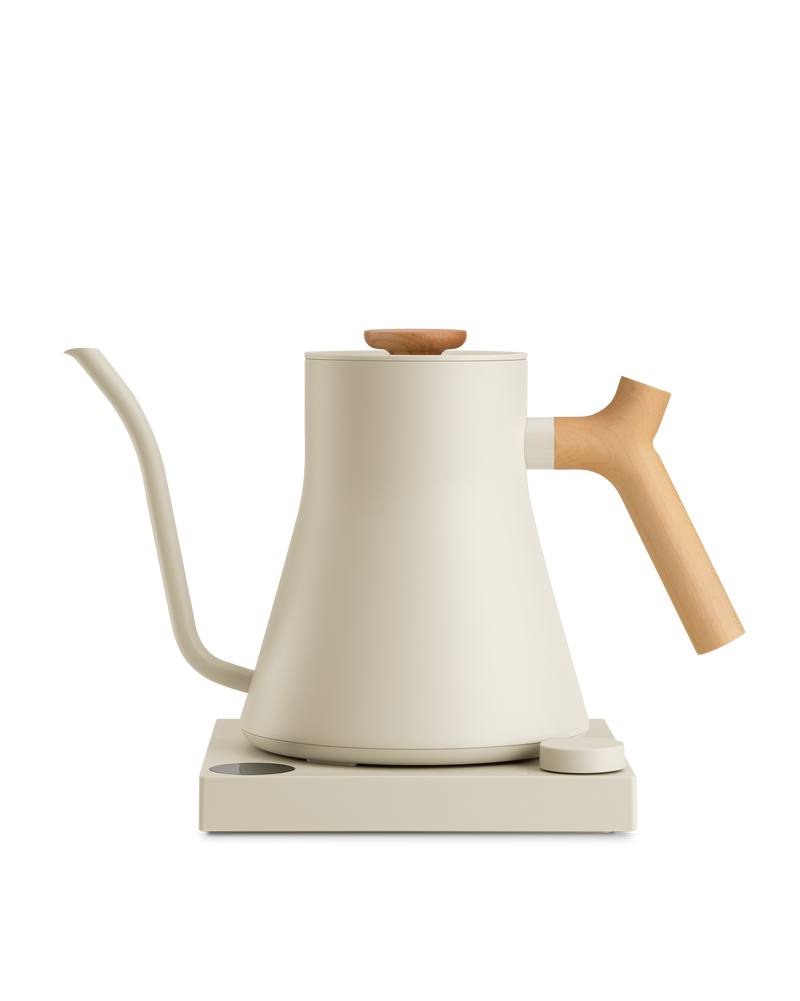
These tea kettle types overlap, as most combine one kind of feature from each pair: a heat source, a spout, a material, and a level of temperature control. An electric kettle can have a gooseneck or a wide spout, and a stovetop kettle can still help you control the temperature with a built-in thermometer. The Stagg EKG Electric Kettle, for example, pairs electric heating with a gooseneck spout, a stainless steel body, and variable temperature control.
Thinking of each pair of features as a choice you can make will help you find the best type of kettle for you. Together, those choices will describe the kettle that fits your needs.
Electric vs. Stovetop Kettles

Your first decision is whether you want an electric or stovetop kettle.
Electric kettles are fast, easy to use, and often include smart features. Most just need an outlet to get going, and many come with helpful features like auto shut-off and boil-dry protection.
Take the Corvo EKG Electric Kettle, for example, which is designed to deliver precision through multiple features, like to-the-degree temperature control, customizable schedule settings, and presets for different types of tea and coffee.
Stovetop kettles, on the other hand, offer a traditional approach to heating water for your beverages. The simple design makes them easy to use without an outlet, but they lack some of the quality-of-life features needed for more precise brewing and delicate tea preparations.
If you're leaning toward stovetop, check that the kettle suits your cooktop. Fellow's stovetop kettles work on gas and coil-top electric stoves. Also consider that most classic stovetop kettles whistle to let you know when water reaches a boil, but it only indicates that one temperature.
If you brew delicate teas or pour-over coffee, a built-in thermometer like the one on the Stagg Pour-Over Kettle lets you watch the temperature rise and lift the kettle off the heat at the perfect moment.
Gooseneck vs. Regular Spout Kettles

The shape of the spout has a big impact on how water pours, which can affect both ease of use and flavor.
Gooseneck kettles feature a thin, curved spout that lets you pour slowly and steadily. This is especially helpful for pour-over coffee, but it can also enhance tea brewing by helping you saturate leaves evenly and mindfully. That control can improve extraction and create a more focused brewing ritual.
Fellow’s Stagg EKG Electric Kettle is a popular gooseneck kettle designed for precision and performance.
Wide-spout kettles trade that slow, steady stream for a faster, fuller pour. They work well for tea, where you're filling a teapot, a mug, or a French press rather than tracing slow circles over a coffee bed. They also make quick work of everyday tasks like instant oatmeal or hot chocolate.
The Corvo EKG Electric Kettle pairs a wide spout built for quick, controlled pours with to-the-degree temperature control. A delicate green tea gets the gentle heat it needs, and your pour stays easy. If you heat water for a crowd, the Clyde Electric Kettle offers a 1.5 L capacity and a drip-free spout.
Which type is best for you depends on how you pour most often:
- Choose a gooseneck if you brew pour-over coffee or want precise control over where the water lands.
- Choose a wide spout if you mostly steep tea, fill a French press, or heat water for the kitchen.
Stainless Steel vs. Glass Kettles

The material of your kettle affects how it looks, how it performs, and how long it lasts.
Glass kettles let you watch the water as it boils. They look sleek and don’t affect the flavor of your water. However, they are more fragile and not as efficient at retaining heat, which means the water cools down faster.
Stainless steel kettles are much more durable and better at holding heat. They also resist dents and scratches, making them a good choice for daily use. Stainless steel heats water more quickly than glass and keeps it hot longer, which can make your routine more energy-efficient.
Variable vs. Non-Variable Temperature Kettles

A variable temperature kettle lets you set a specific temperature, which is important for unlocking the best flavor in both tea and coffee.
Different teas call for different temperatures. Green and white teas do best with lower heat, while black and herbal teas typically need hotter water. The same goes for coffee—too hot, and it can taste bitter. Too cool, and the flavor may not fully develop. Variable temp kettles like Stagg EKG Pro or Corvo EKG Pro help you get it just right, every time.
Non-variable temperature kettles simply boil the water. You can use a thermometer to estimate temperature, but it's harder to get precise results. These are fine for everyday use, especially if you're not too particular about exact temps.
How to Choose the Right Kettle

There's no one-size-fits-all kettle. The right choice depends on the features that matter most to you and how you brew. Here are a few things to keep in mind when choosing between tea kettle types:
- Temperature control: If flavor precision is important to you, choose a kettle with variable temperature settings.
- Capacity: Think about how many cups you brew regularly. A 0.9 L (30 oz) kettle will comfortably cover a regular teapot or two large mugs. If you brew for a household or move between drinks and cooking, a 1.5 L (50 oz) means fewer refills.
- How you brew: If you mainly brew pour-over coffee or high-end teas, consider a gooseneck electric kettle with temperature presets. For more casual use, a basic stovetop kettle might be all you need.
- Where you brew: Electric kettles can be used anywhere there's an outlet, such as a coffee bar, office, or hotel. Stovetop kettles need a burner, so they're best for kitchen use.
- Budget: Prices vary depending on materials and features. Higher-end kettles often include additional features that can justify higher price points than simpler tools.
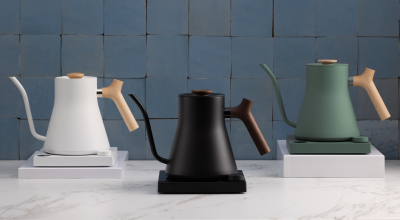
- Design: Since kettles often live on the counter, appearance matters. Fellow's kettle collection includes several colorways and finish options to match your personal style.
- Extra features: Consider whether you can benefit from additional quality of life features, like color display screens, hold modes, and custom chime tones.
Kettle Handling and Cleaning
A kettle you reach for every day should feel steady in your hand and be as hassle-free as possible to maintain.
Look for handles that stay cool and comfortable, and a shape that balances well as you tip it, so the weight doesn't pull the spout forward mid-pour. Keep the filled weight in mind, too: each liter of water adds about 2.2 lb, which you'll notice over a long, slow pour.
Care for most tea kettles is simple. Empty your kettle after each use rather than letting water sit, and wipe the exterior with a damp cloth. Over time, minerals in your water leave a chalky buildup called limescale, but descaling periodically with a vinegar or citric acid solution, and cleaning the interior with a soft sponge, is usually all it takes to keep a good kettle in tip-top shape.
Frequently Asked Questions About Tea Kettles
Still have questions about the different types of tea kettles and how to choose them? Here are some additional answers to common questions you might have when choosing a tea kettle.
Which Type of Tea Kettle Is Best for Me?
The best type of tea kettle for you depends on what you brew most often and how. For pour-over coffee, a gooseneck kettle with variable temperature control can be a great choice. For loose-leaf tea, a wide-spout kettle with temperature control lets you match each tea's ideal heat and fill a teapot quickly. For everyday hot water, a simple boil-only kettle is often enough.
Should I Choose a Stainless Steel or Glass Tea Kettle?
For most people, stainless steel is the better choice because it's durable, holds heat well, and stands up to daily use. Glass can be a better alternative if you prefer the transparent aesthetic and don't mind handling a more fragile kettle. Both keep your water tasting neutral when you clean and descale them regularly.
What Is a Japanese Tea Kettle Called?
A Japanese cast-iron kettle is called a tetsubin. It's used to heat water for tea and has a spout, a lid, and a handle that arches over the top. It's often confused with the tetsukyūsu, an enamel-lined cast-iron teapot made for steeping tea rather than heating water over a flame.