Some mornings call for something a little different. Not more coffee, just elevated — something that feels considered rather than automatic.
The shaken espresso is that drink. It is cold, textured, and built on a technique simple enough to do at home but satisfying enough to become a ritual.
Here is where it comes from, what makes it work, and how to make one worth looking forward to.
Key takeaways
- Shaking creates a unique foam by emulsifying espresso oils with air.
- The drink originates from the traditional Italian Caffè Shakerato; the origins of the Shakerato are still unknown.
- Success depends on a precision grind and a well-extracted espresso shot.
- A vigorous 10 to 12 second shake is needed for lasting texture and foam.
What is a shaken espresso?
A shaken espresso (commonly called an iced shaken espresso) is built on contrast. Hot espresso meets ice and sweetener, then gets shaken hard enough to become a chilled espresso with a texture that a standard iced coffee never quite reaches. The result is a drink that is flash-chilled, aerated, and textured in a way that a standard iced coffee never quite reaches.
It is not an iced latte. It doesn't require milk, there's no slow layering of ingredients. Just espresso, cold, and a structured foam that holds its shape long enough to enjoy.
| Iced Latte | Shaken Espresso | |
| Preparation |
Espresso poured over cold milk and ice |
Espresso shaken vigorously with ice and sweetener |
|
Texture |
Liquid and milky | Silky bittersweet foam with aerated volume |
| Mouthful | Thin and creamy | Velvety and structured |
| Temperature | Gradually chilled | Flash-chilled for immediate crispness |
| Dilution |
Higher as ice melts in the glass |
Minimal due to rapid aeration and chilling |
| Aesthetic |
No foam, light brown in color due to the combined milk and coffee |
Uniformly textured with a frothy crown |
The Shakerato: Origins of the shake
The shaken espresso has a proper ancestor. The Caffè Shakerato is an Italian classic — a single or double shot shaken with ice in a cocktail shaker, then strained into a chilled coupe or martini glass. It has been a fixture in Italian bars and cafés for decades, a warm-weather answer to a culture built around espresso.
No milk. No elaborate additions. Just espresso, cold, and a touch of sugar.
The Shakerato was never about diluting the coffee or making it easier to drink. It was about honoring the espresso while changing its form — basically elongating the crema; taking something familiar and expressing it differently. That sensibility has held up remarkably well.
The modern shaken espresso is a natural evolution. The glass changes. The ritual becomes more accessible. But the core idea — shake it, do not stir it — remains exactly the same. It is an iterative improvement on a timeless original, which is about as Fellow as it gets.
Why do we shake espresso?
Shaking espresso is not just a technique. It is function built into the form of the movement itself.
When hot espresso meets ice in a sealed shaker, two things happen at once. The liquid flash-chills, locking in flavor before heat can continue to alter it. And vigorous agitation forces air into the espresso's natural oils, creating a stable foam that alters the drink's texture and perceived taste.
That second part matters. Aeration can soften bitterness, round out acidity, and bring forward a more nuanced coffee flavor (the subtler tasting notes that heat can sometimes obscure). The result is espresso that feels lighter and more balanced — not weaker, just differently expressed.
Shaking also controls dilution. Because the ice works quickly inside a closed environment, less melt makes it into the final pour. You get a colder drink with more concentrated flavor, a frothy texture, and a structure that holds.
The shake is not a flourish. It is the mechanism. Everything good about the drink runs through it.
How to make a shaken espresso at home

Step 1: The precision pull
Everything starts with the shot. A well-extracted espresso — balanced, with a healthy crema — gives your shake its structure and its foam. Thin or under-extracted shots will not hold their texture and will fade quickly in the glass.
Before you pull, dial in your grind. Small adjustments to grind size have an outsized impact on the final cup, and for a drink built around texture and nuance, that step is worth the care. If you are still finding your footing with espresso, Fellow's espresso beginner's guide is a helpful place to start.
Step 2: Combine your elements
Add ice and your sweetener to a cocktail shaker or a mason jar with a secure lid. Liquid sweeteners — a simple syrup works well — integrate more evenly than granulated sugar, which can resist dissolving fully in cold conditions and disrupt the foam.
Pour your shots of espresso directly over the ice while still hot.
The temperature contrast is part of what makes the shake work.
Step 3: The tactile shake
Seal the shaker. Feel the weight shift as the ice settles.
Then shake hard — a full, vigorous motion for 10 to 12 seconds. Not a gentle swirl. The agitation is the point: it forces air into the espresso, bonds it with the oils, and builds the foam. You will feel the shaker go cold in your hands quickly. That is the flash-chill happening in real time, and it is a satisfying thing to notice.
Step 4: The final pour
Strain the espresso slowly into your glass. Pour with a little patience and watch the foam settle on top — a frothy crown that signals the shake worked.
Drink it while the texture holds.
A popular variation: brown sugar shaken espresso
One of the most well-known takes on the format is the brown sugar shaken espresso — a simple riff that swaps plain simple syrup for a brown sugar syrup. The molasses notes in brown sugar complement darker roasts particularly well, adding warmth and depth without overpowering the espresso.
Elevating your shaken espresso with purpose

The shaken espresso earns its place in a morning routine because it asks something of you. A deliberate pull. A vigorous shake. A pour with a little care behind it.
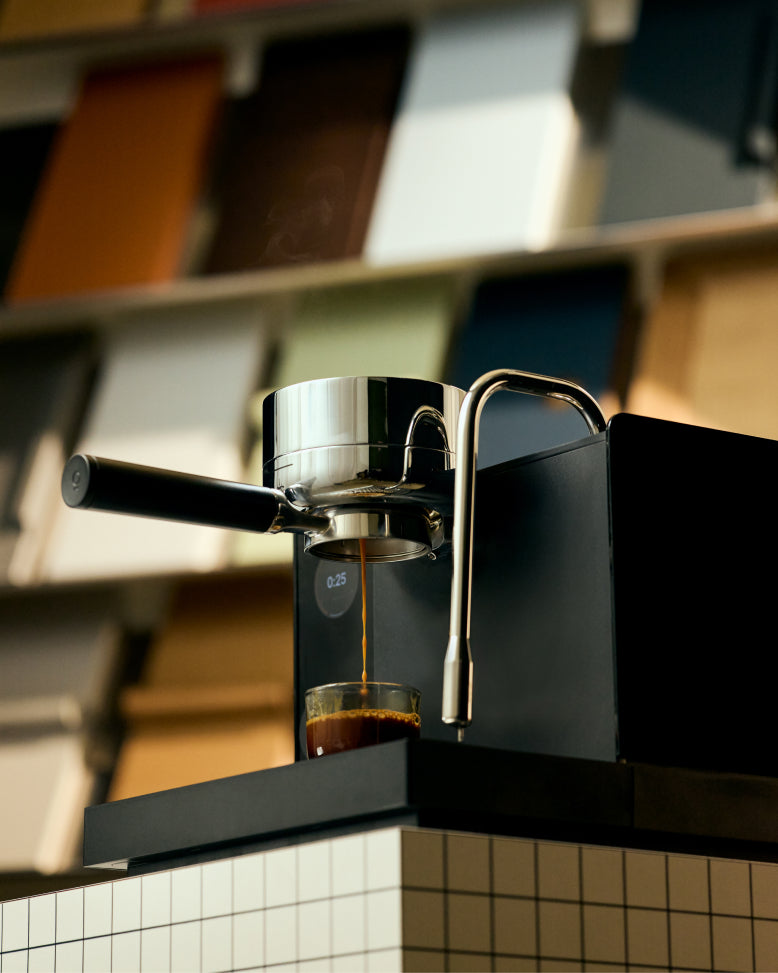
That kind of ritual does not require a complicated setup, but it does benefit from equipment that meets you halfway. Fellow's espresso machine is designed with exactly that in mind: approachable enough for the home brewer, but precise enough to pull a shot worth shaking.
You can also explore Fellow's full espresso guide to go deeper on technique, dialing in, and getting more from every shot.
A good cup earns its place through reliability and quiet satisfaction. The shaken espresso, done well, does both.
Shop the Espresso Series 1 Setup Bundle
Frequently asked questions
Does shaking espresso change its flavor profile?
Yes, and meaningfully so. The rapid aeration and chilling can mellow the more intense acidity of a hot shot, creating a smoother, more balanced profile.
What is the best espresso roast for a shaken espresso?
Any fresh bean can work, but medium roasts often perform well. The higher oil content in these roasts in comparison to lighter roasts tends to contribute to a more stable, voluminous foam that holds its structure throughout the drink.
Does the type of sweetener affect foam quality?
It can. Simple syrups and liquid sweeteners emulsify more effectively during the shake than granulated sugar. They integrate into the espresso's lipids without the friction of undissolved crystals, which typically results in a more uniform texture and a sturdier foam.
Why does my shaken espresso separate so quickly?
Rapid separation is usually a sign of thin extraction or insufficient shaking. To build a foam that holds, make sure your espresso shot has a healthy crema, and shake vigorously for at least 10 to 12 seconds. The air needs time to fully bond with the oils.
Can you use decaf espresso for a shaken drink?
Absolutely. The aeration process depends on the proteins and lipids in the coffee, not the caffeine content. A well-extracted decaf shot will produce the same textured, structured result as its caffeinated counterpart.