While standing on the liquor aisle, it’s easy to assume that a functional home bar requires dozens of bottles plus tons of specialized syrups and esoteric bitters to work. In reality, you mostly need a mix of five versatile spirits to get a flexible foundation that covers a variety of cocktails and delicious mixed drinks.
True home bar essentials prioritize versatility, availability, and ease of use. The trick to putting them together is to thoughtfully select them around a core menu that covers popular drinks you and your guests are likely to enjoy.
Here’s a selection of those five essential bottles to get you started, alongside the classics they unlock, the mixers you’ll want for coverage, and the tools to make your life easier and bring it all together.
Key Takeaways
- A functional home bar relies on a small, versatile foundation of spirits over an exhaustive collection.
- Classic, unflavored bottles offer the greatest flexibility for exploring multiple cocktails from a single base.
- Fresh citrus, clean ice, and dependable tools elevate drinks far more than novelty gadgets.
- Grow your collection organically, adding new bottles only when they support the drinks you genuinely enjoy.
How to Choose Your Bar’s First Five Bottles
When building your initial collection, look for bottles that can easily stretch across several popular recipes. A well-rounded bar should be able to handle refreshing tall drinks, bright citrus-led options, and robust, spirit-forward classics as needed.
Before you shop, take a moment to identify three to five cocktails you genuinely enjoy drinking or serving. After all, the best alcohol for cocktails is the one that matches your tastes and actually gets used.
Standard, unflavored versions of spirits adapt better to a variety of mixers than heavily flavored or highly specialized variants, and reliable mid-range bottles are perfectly suited for mixed drinks. The most expensive option is rarely the most useful for everyday mixing.
Also, try to keep your selection simple. Instead of buying three different types of the same spirit, purchase one standard-size bottle per category.
The 5 Essential Bottles for a Beginner Home Bar
This five-bottle collection acts as a balanced starting point, each bringing a distinct flavor profile to your bar and supporting a unique range of drinks. Just remember this is a flexible framework; if you know you never drink rum or vodka, simply swap that category for a bottle that supports the drinks you actually want to make.
1. Whiskey: Bourbon or Rye
Start with a classic bourbon or rye. Bourbon usually brings a rounder, sweeter profile with notes of vanilla and caramel, while rye leans drier and spicier.
Either choice provides a solid foundation for an Old Fashioned, Whiskey Sour, Manhattan, or a refreshing Whiskey Highball. It also offers excellent value because it is highly enjoyable neat or over ice.
If you are new to the category, start with bourbon for softer sweetness, or choose rye for a bolder, spicier kick. For a gentler profile, a blended Irish or Canadian whiskey can be an excellent, forgiving alternative.
2. Gin: A Versatile London Dry
A London dry gin offers an adaptable starting point with a recognizable, juniper-led profile.
It serves as a crisp botanical backbone for a Gin and Tonic, Martini, Negroni, or Tom Collins. Tonic, citrus, vermouth, and bitter modifiers can also pull this single bottle in entirely different and novel directions.
Botanical profiles vary significantly across brands, however. If you dislike heavily juniper-forward spirits, you might prefer a softer, contemporary gin with bright citrus or floral notes.
3. Tequila: Blanco
For a clean, bright base, a 100% agave blanco tequila is a must-have.
Its fresh agave profile works exceptionally well with citrus and carbonated mixers, making it the ideal base for a Margarita, Paloma, Tequila Soda, or a simple pour with fresh lime.
Blanco tequila is unaged (or rested very briefly), keeping the agave front and center. If you prefer rounder, lightly aged flavors, a reposado tequila is a fantastic alternative that still performs well in most classic cocktails.
4. Rum: White or Lightly Aged
A white or lightly aged rum is incredibly useful in a beginner bar, offering a crisp, grassy, or slightly sweet flavor profile depending on its origin.
It provides the light, clean foundation necessary for a Mojito, Cuba Libre, Daiquiri, or other bright, citrus-led drinks. Because white rum blends so seamlessly with fresh juices and mint, it acts as a perfect blank canvas for warm-weather mixing as well.
If you are primarily interested in richer, spice-driven, or more complex tropical cocktails, consider starting with an aged or dark rum instead.
5. Vodka: A Clean, Unflavored Style
Vodka’s relatively neutral profile makes it highly useful when mixers, citrus, or coffee lead the drink.
A dependable, unflavored vodka is all you need for a Moscow Mule, Vodka Soda, Cosmopolitan, and an Espresso Martini. A solid neutral vodka also adapts to whatever modifiers you have on hand, so an ultra-premium bottle is unnecessary for most mixed drinks.
If vodka rarely appears in your preferred drinks, simply replace it with a second bottle from the spirit category you use most often.
| Bottle | Recommended Starting Style | Cocktails It Unlocks | Useful Pairings |
| Whiskey | Bourbon or rye | Old Fashioned, Whiskey Sour, Manhattan | Bitters, lemon, simple syrup, sweet vermouth |
| Gin | London dry | Gin and Tonic, Martini, Negroni | Tonic, lemon, dry vermouth, bitter aperitif |
| Tequila | 100% agave blanco | Margarita, Paloma, Tequila Soda | Lime, orange liqueur, grapefruit soda |
| Rum | White or lightly aged | Daiquiri, Mojito, Cuba Libre | Lime, simple syrup, mint, cola |
| Vodka | Clean and unflavored | Moscow Mule, Vodka Soda, Espresso Martini | Ginger beer, soda, coffee liqueur, espresso |
The Mixers That Make Your Bottles Go Further
Spirits are only the foundation; the supporting ingredients you have at hand are what turn them into delicious mixed drinks. To maximize your bar necessities without overwhelming your fridge, build a restrained collection of bar mixers and modifiers based on your planned drink menu.
A solid starter kit can include a combination of fresh lemon and lime juice, simple syrup, aromatic bitters, tonic water, club soda or sparkling water, ginger beer, cola, orange liqueur, coffee liqueur, and sweet or dry vermouth, all selected to match your favorite cocktails.
As you put these together:
- Purchase carbonated mixers in smaller bottles or cans so they are less likely to go flat.
- Remember that opened vermouth should be refrigerated, and fresh citrus juice and homemade syrups have limited shelf lives.
- Include one thoughtful alcohol-free option, such as a botanical alternative or a flavorful mocktail option, for guests who aren't drinking alcohol.
A Small Garnish Collection Goes a Long Way
A thoughtful garnish does more than make a drink look finished; it adds essential aroma and that final layer of flavor.
Lemons, limes, and oranges are the most adaptable garnishes you can get because they can supply juice, wedges, wheels, or expressed peels. Add mint, olives, cocktail cherries, or coarse salt only when they directly support the drinks you regularly make.
Finally, don't overlook your ice. Keep enough clean, fresh ice available for proper chilling and dilution. Standard cubes work for most mixed drinks, while a large-cube mold is a worthwhile upgrade for short cocktails.
Getting The Tools and Glassware You Actually Need
You can’t talk about home bar essentials without mentioning the tools required to bring those ingredients together.
Accurate measuring, proper chilling, and dependable prep work will improve your drinks far more than novelty gadgets, so keep your beginner kit compact: a reliable jigger, a cocktail shaker, a strainer, a long bar spoon, a mixing glass, a muddler, and a simple citrus press will cover most classic recipes.
For glassware, favor adaptable serving pieces over a separate glass for every specific cocktail. A highball glass is ideal for tall drinks with carbonated mixers, while a coupe or stemmed glass works perfectly for drinks served “up” without ice.
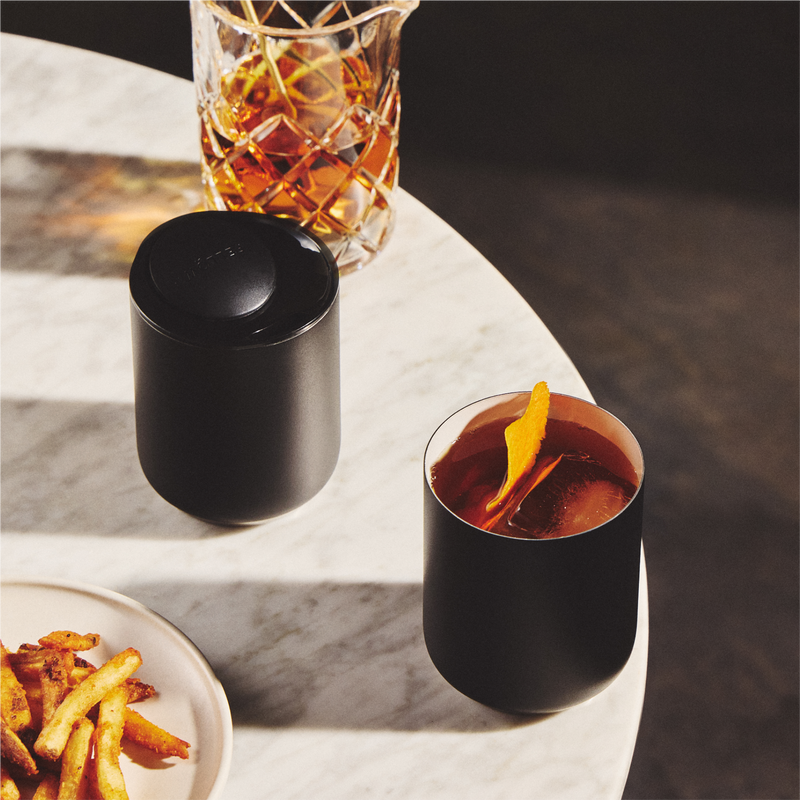
For short cocktails or spirits poured over ice, a sturdy lowball glass like the Rocky Lowball Tumbler is incredibly practical for everyday use, keeping your drink cold without sweating on the coffee table or having your ice melt too quickly.
How to Grow Your Home Bar Without the Clutter
A successful home bar is measured by the moments it makes possible, not by the sheer number of bottles on the shelf. By beginning with a restrained selection of your favorite spirits and the mixers you actually enjoy, you build a setup that invites use rather than gathering dust.
Once you have all the right ingredients alongside the tools you require, mixing your favorite cocktails at the end of the day becomes a more enjoyable experience.
Ultimately, your ideal home bar should reflect your personal tastes—so start small, mix confidently, and expand only when you find a new drink you love.
And if you are looking to upgrade your setup with tools that look as good as they perform, explore Fellow’s barware collection for modern, functional essentials.
Frequently Asked Questions About Home Bar Essentials
As you plan your home bar’s inaugural shopping list, you’ll likely encounter a few additional practical questions. Here are quick answers to help you start mixing confidently in no time.
What should I stock in my house bar?
Start with three to five versatile base spirits (like whiskey, gin, tequila, rum, and vodka), along with fresh citrus, sweetener, aromatic bitters, and two or three of your preferred mixers. Keep fresh ice on hand, and a compact set of dependable tools to help your preparations. Choose your specific selection based on the cocktails you and your guests actually drink, and consider including appealing alcohol-free options.
What is the 3:2:1 rule in bartending?
The 3:2:1 rule often describes a sour-style starting ratio of three parts spirit, two parts sour ingredient, and one part sweetener. However, it is an adaptable starting framework, not a universal law, and may describe different proportions in specific drinks like certain spritzes, Daiquiris, or Margaritas.
What are some cool things to have in a home bar?
Cool must-haves for home bars include a well-balanced jigger, a large-cube ice mold, a sharp citrus peeler, an attractive tray, a useful cocktail book, and tactile serving pieces. Prioritize tools that are both enjoyable to use and highly practical, and avoid novelty accessories that consume counter space without improving how you prepare or serve your drinks.
What are the seven basic cocktails?
While there is no single universally accepted list, a practical beginner set includes the Old Fashioned, Martini, Daiquiri, Margarita, Mojito, Whiskey Sour, and Whiskey Highball. Learning the balance and preparation methods behind these foundational drinks makes it much easier to understand and execute many related variations.