Watch a good bartender long enough, and you notice how rarely they stop to remember anything. They reach, pour, taste, and adjust.
Behind that ease is a pattern, not a recipe. A Daiquiri, a Gimlet, a Margarita, and a Whiskey Sour are all the same shape in different clothes: a spirit, a sweet, and a sour, in roughly the same proportions.
Understanding how those three behave together is the difference between fumbling around a folder of cocktail recipes and truly knowing how to make a cocktail on your own. That relationship starts from one ratio, and it’ll give you what you need to start mixing delicious drinks at home.
Key Takeaways
- A Daiquiri, a Gimlet, a Margarita, and a Whiskey Sour differ by ingredient, not by structure — each one is a spirit, a sweet, and a sour.
- Two parts spirit to one part each of sweet and sour produces a balanced drink you can then adjust; 2:¾:¾ produces a drier and more spirit-forward one.
- Limes, syrups, and liqueurs all vary, which makes tasting and adjusting the actual skill rather than a sign that something went wrong.
- The pattern holds across the sour family: Martinis, Negronis, and Old Fashioneds operate on a different logic.
What Ingredients Do You Need for a Cocktail?
Every drink in this family of cocktails is mixed from four core ingredients: a spirit, a sweet, a sour, and ice, but none of them are locked to specific bottles or brands. Each represents a role you can fill with whatever you have that suits it. Popular alternatives for these ingredients include:
- Spirit: Gin, rum, tequila, and whiskey.
- Sweet: Simple syrup (sugar dissolved in water), agave, honey syrup, or a suitable liqueur.
- Sour: Fresh lemon or lime juice.
- Ice: Chills and dilutes as it melts.
The spirit of your choice sets the character; sweetness rounds out the alcohol and acidity; citrus brings lift; and melting ice binds it together.
You can then mix and match flavors to make cocktails without the constraints of a specific recipe, which counts for a lot when you're still stocking your home bar and guests are on their way.
What Is the 2:1:1 Cocktail Ratio? (And How Does It Work?)
The “golden ratio” or “2:1:1” ratio refers to a cocktail mix that’s two parts spirit, one part sweet, and one part sour.
For one drink, that's typically 2 ounces of spirit, 1 ounce of sweetener, and 1 ounce of citrus, but a "part" is whatever you're measuring or pouring with. Two shot glasses to one each would give you the same drink; the important thing is to keep the proportions consistent.
A related ratio, 2:¾:¾, keeps the same architecture on a leaner frame: same 2 parts of spirit, less of everything else, so the base has more room to speak.
One thing to keep in mind: this framework belongs to the sour family of cocktails. Other drinks, like Martinis, Manhattans, Negronis, and Old Fashioneds, operate on a different logic.
Also note that these ratios are there to give you a solid starting point for your mixes. As you gain more experience, you can experiment with custom balances for specific ingredients to produce tailored drinks to suit your and your guests' tastes.
|
Starting Ratio |
Example Pour | Result | Best For |
| 2:1:1 | 2 oz spirit, 1 oz sweet, 1 oz sour | Rounder and more approachable | Learning the formula, or building a fuller, softer drink |
| 2:¾:¾ | 2 oz spirit, ¾ oz sweet, ¾ oz sour |
Drier and more spirit-forward |
A classic starting point for many modern sours |
| Custom balance | Adjust in small increments | Tailored to the ingredients and the drinker | Refining the drink after you've tasted it |
How to Make Cocktails at Home With the Golden Ratio
Once you know the ratio and understand the reasoning behind it, the rest is mechanics. You just need to follow seven steps to prepare a variety of delicious, sour cocktails:
1. Choose the base spirit: Start with a bottle you already like.
2. Choose the sour element: Fresh lemon or lime, squeezed that day if you can.
3. Choose the sweet element: A syrup or liqueur that flatters the base.
4. Measure the ingredients: Start with 2:1:1 or 2:¾:¾, then adjust to taste.
5. Add ice and shake: Fill the shaker generously and shake for 10 to 15 seconds, until the outside is almost too cold to hold.
6. Strain and serve: Usually, up in a chilled glass, or over fresh ice.
7. Add a finishing touch: Consider adding a citrus peel, wheel, or sprig when it adds aroma or visual appeal.
A few additional considerations as you choose and mix your ingredients:
- Citrus drinks get shaken rather than stirred because shaking chills, dilutes, and forces ingredients of different weights together at once — syrup and juice won't fold into a spirit on their own.
- Taste a small sip after shaking, before the garnish. This is the moment you still have options.
- If it needs adjusting, add one component at a time; a teaspoon at first, up to ¼ ounce, then re-shake briefly with ice.
- Expect to adjust more than you'd think — limes vary in acidity, syrups vary in sweetness, and a liqueur brings its own alcohol along with the sugar.
- Serve over fresh ice rather than what you shook with; those half-melted pieces would keep thinning the drink.
How to Balance a Cocktail to Your Taste
Tasting and adjusting your cocktail as you mix is part of the process, not a sign that something went wrong.
The rule is one change at a time, in small amounts. Add sweetener and citrus together and you won't know which one fixed it or whether they canceled each other out. Move one, taste again, and you start building a feel for what half a teaspoon actually does — and that knowledge carries into every drink you make afterward.
Just keep in mind that “balance” doesn't mean every flavor arrives at equal volume. A spirit-forward sour should taste like the spirit, but sometimes you’ll want to go for something milder, sweeter, or plainly more diluted.
The best mixed drinks aim for a sweet and sour mix that supports the direction you want, rather than a drink where nothing stands out.
| If the Cocktail Tastes… | Try This |
| Too sour or sharp | Add a small amount of sweetener |
| Too sweet or heavy | Add a small amount of fresh citrus |
| Too strong or hot | Allow slightly more dilution, or shake a little longer |
| Thin or washed out | Use less dilution next time, or start with colder, firmer ice |
| Flat | Add a little citrus or an aromatic garnish; use salt or saline sparingly, if at all |
| Unfocused | Strip back the additions and return to the three core components |
When something lands, write it down: what you used and how much of it. Do that a few times, and you'll have a short list of easy mixed drinks that are genuinely yours, tuned to your taste rather than someone else's.
Four Classic Cocktails Built on the Same Framework
The best way to see how far this method goes is to look at the popular drinks that already use it. Each of these is a bar staple for good reasons, and each one is built from the same three elements of the golden ratio:
- Daiquiri: rum, lime, simple syrup.
- Gimlet: gin, lime, simple syrup — or gin and lime cordial, which fills the sweet and sour roles in a single pour.
- Margarita: tequila, lime, orange liqueur, sometimes with a little agave.
- Whiskey Sour: whiskey, lemon, simple syrup.
Pour any of them at 2:1:1 and you'll get a recognizable version of the drink. Change the spirit and the citrus, pick a sweetener that suits them, and you've moved from one classic to the next without looking anything up.
You can start with the Margarita if you want to see the method flex. Orange liqueur brings sugar and alcohol at once, so it can cover part or all of the sweet role, depending on which bottle you own. You can then experiment as you decide whether agave has anything to add. That single decision can teach you more about how sweeteners behave than any recipe could.
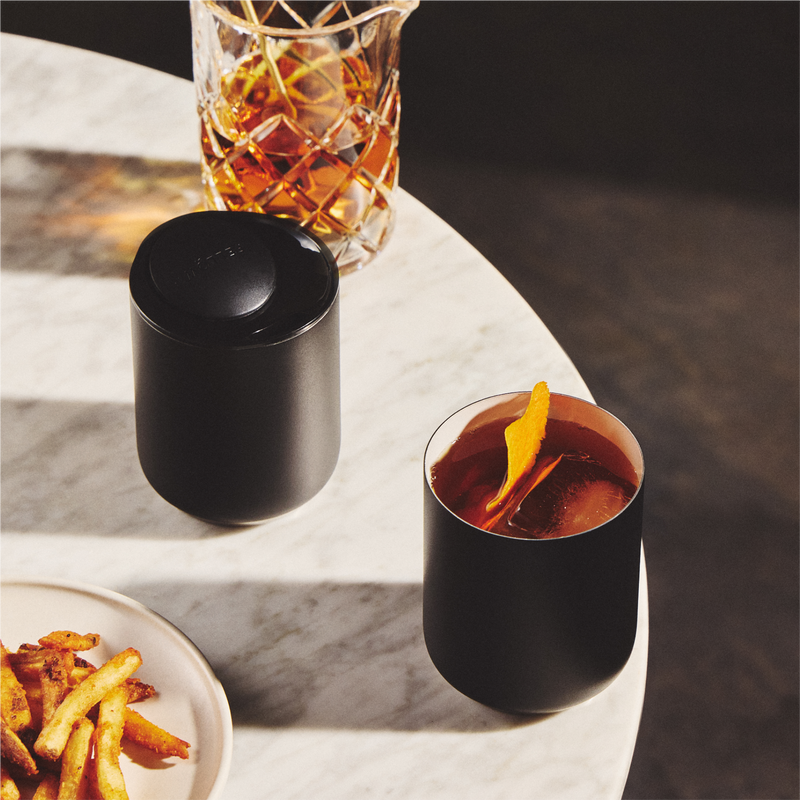
If you prefer something simpler, the Whiskey Sour is the one to pour when people come over. It's forgiving, familiar, and you can pour it over a single large cube on one of our Rocky Lowball Tumblers to keep your drink from watering down and tasting the way you built it.
How to Create Your Own Cocktail
By this point, you have what you need to make your own cocktail rather than someone else's. The grid below gives you a solid starting point to do so: pick one from each column, and you'll have a delicious drink nobody has a recipe for.
| Spirit | Sweet | Sour |
| Gin | Simple syrup | Lemon |
| Rum | Honey syrup | Lime |
| Tequila | Agave syurp | Grapefruit |
| Whiskey | Maple syrup | Lemon |
| Brandy | Orange liqueur | Lime |
Some combinations will click immediately. Tequila and lime, whiskey and lemon: you already know those from the classics. Grapefruit is an interesting one, milder than lemon or lime, so a grapefruit sour lands softer than you'd expect. If it needs a lift, a small pour of lime alongside it can then sharpen the edges without taking over.
Once the three core elements taste right, modifiers give you further room to experiment — a few dashes of bitters, a sprig of thyme, a slice of jalapeño. Add them to a drink that already works, one at a time, and keep the ones worth repeating.
One Ratio, Countless Possibilities
Confidence with cocktails and coming up with new delicious mixes comes from knowing what each ingredient does and how they work together, not from memorizing measurements.
As you practice your mixology skills, try picking a spirit you like, adding something sweet and something sour, shaking it cold, then tasting until it's right. That's the whole method, and it works with whatever happens to be on your shelf.
Frequently Asked Questions About Making Cocktails
Once you start learning about ratios and trying out ingredient combinations, a few questions often come up. Our glossary of cocktail terms has you covered for terminology, and here are a few additional answers to things you might be wondering as you practice your skills.
What is the simplest cocktail I can make?
A two-ingredient highball (spirit topped with soda) is technically as simple as it gets. A three-ingredient Daiquiri remains pretty straightforward and also shows how spirit, sweet, and sour ingredients hold each other up.
What is the best cocktail to make at home?
Daiquiri, Gimlet, or Whiskey Sour. Each uses accessible ingredients and puts the spirit–sweet–sour relationship where you can taste it. Choose whichever one matches the bottle you have on hand.
What are some easy three-ingredient cocktails?
Four three-ingredient cocktails worth knowing:
- Daiquiri: rum, simple syrup, lime
- Gimlet: gin, simple syrup, lime
- Whiskey Sour: whiskey, simple syrup, lemon
- Simplified Margarita: tequila, agave, lime